
Echoes Of Displaced Antiquities
Twelve paintings. Five chapters. One question.
An ongoing series.
This series investigates Ancient Egyptian artefacts that were removed from their original context — from temples, tombs, architectural bodies — and now reside in foreign museum collections. Not as neutral objects of display, but as presences still shaped by what they lost.
Each work takes a single object as its subject. The investigation moves through five chapters: Face, Voice, Body, Place, Memory — five dimensions of what it means to be separated from the civilisation that made you.
The position of this work is clear: these objects belong to Egypt. But the paintings themselves move beyond statement into research, asking how displacement changes an object, how absence leaves a mark, and what a civilisation looks like when its image is held elsewhere.
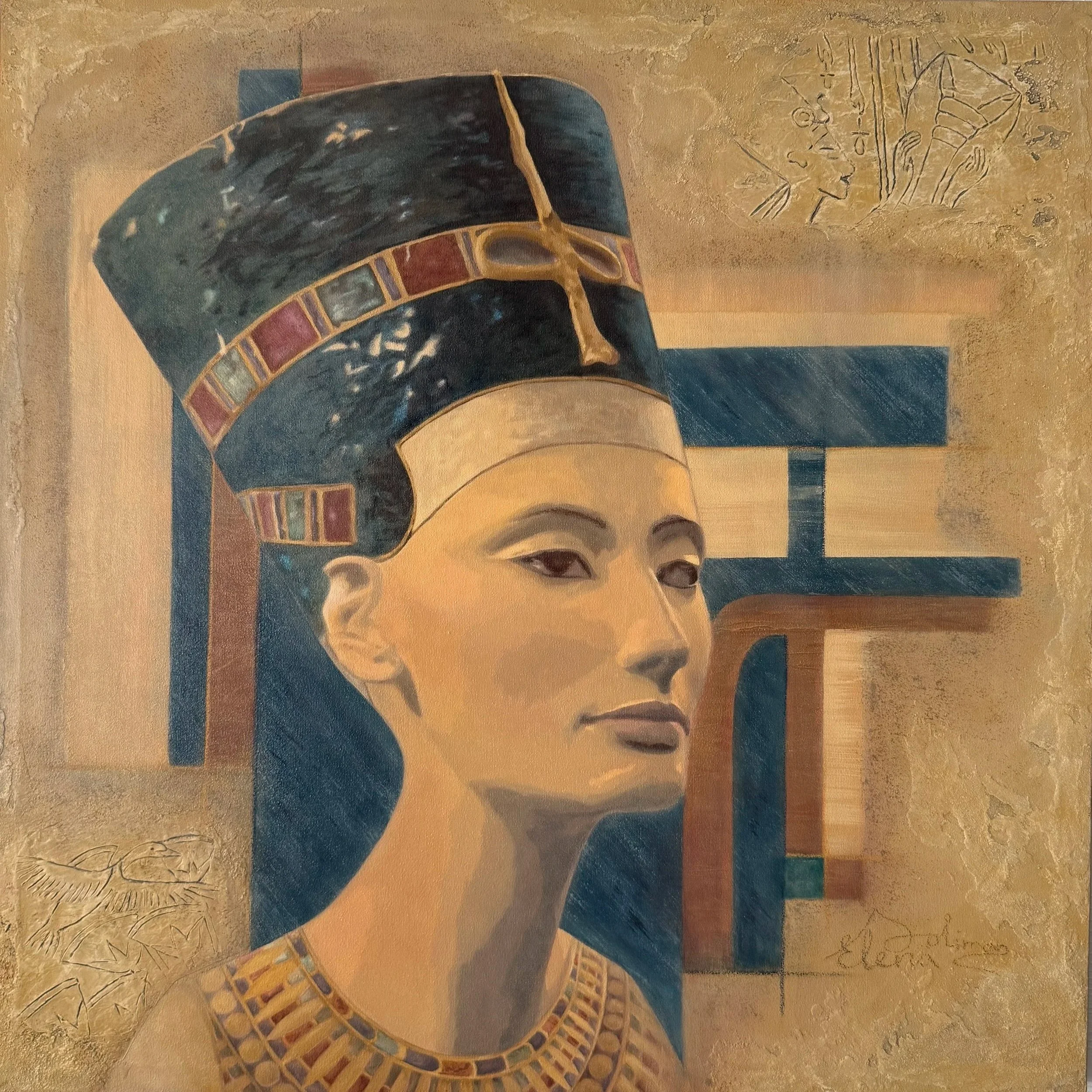
Nefertiti. A Silent Claim, 2026
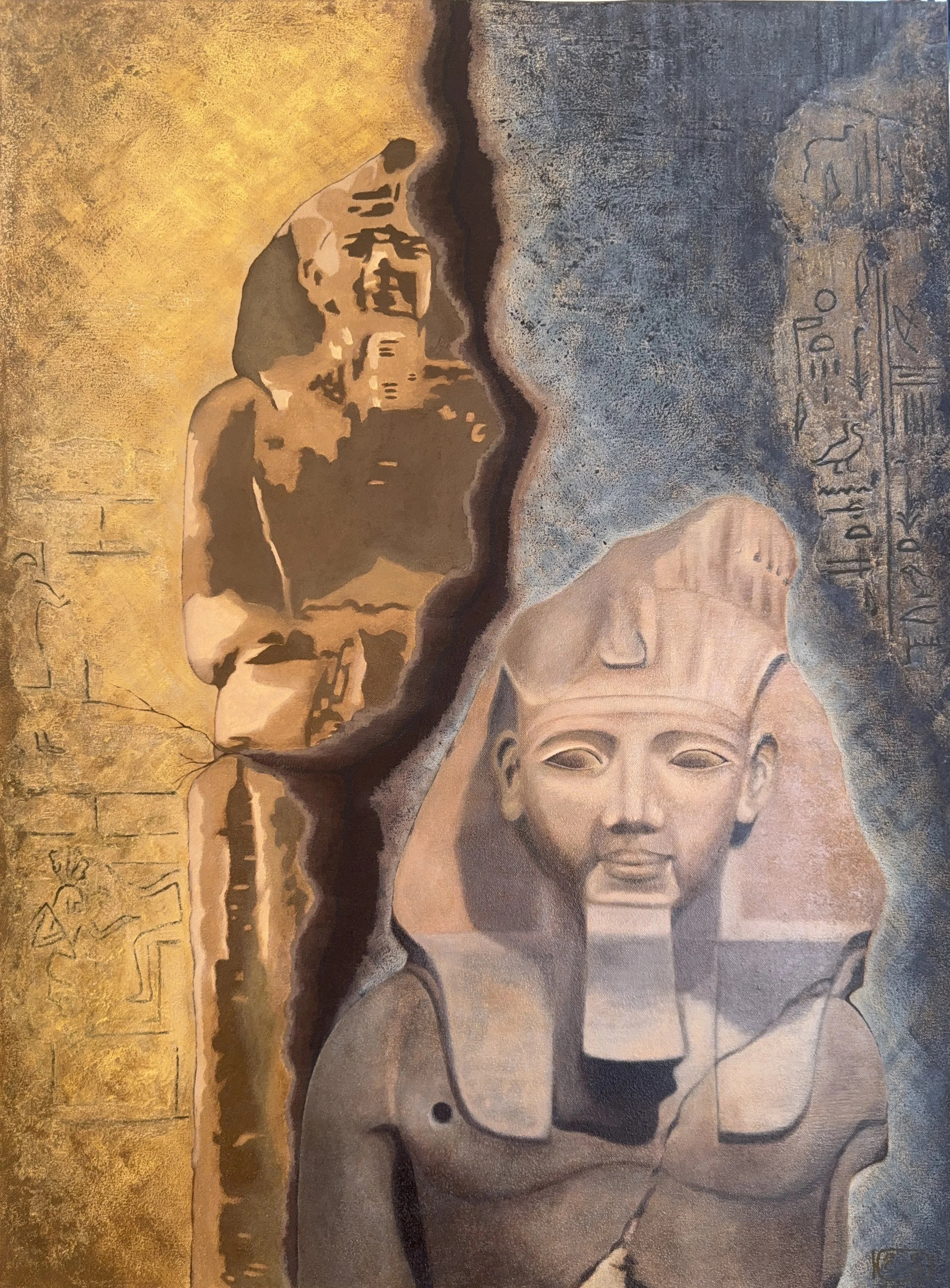
The Younger Memnon. The Body Left Behind, 2026
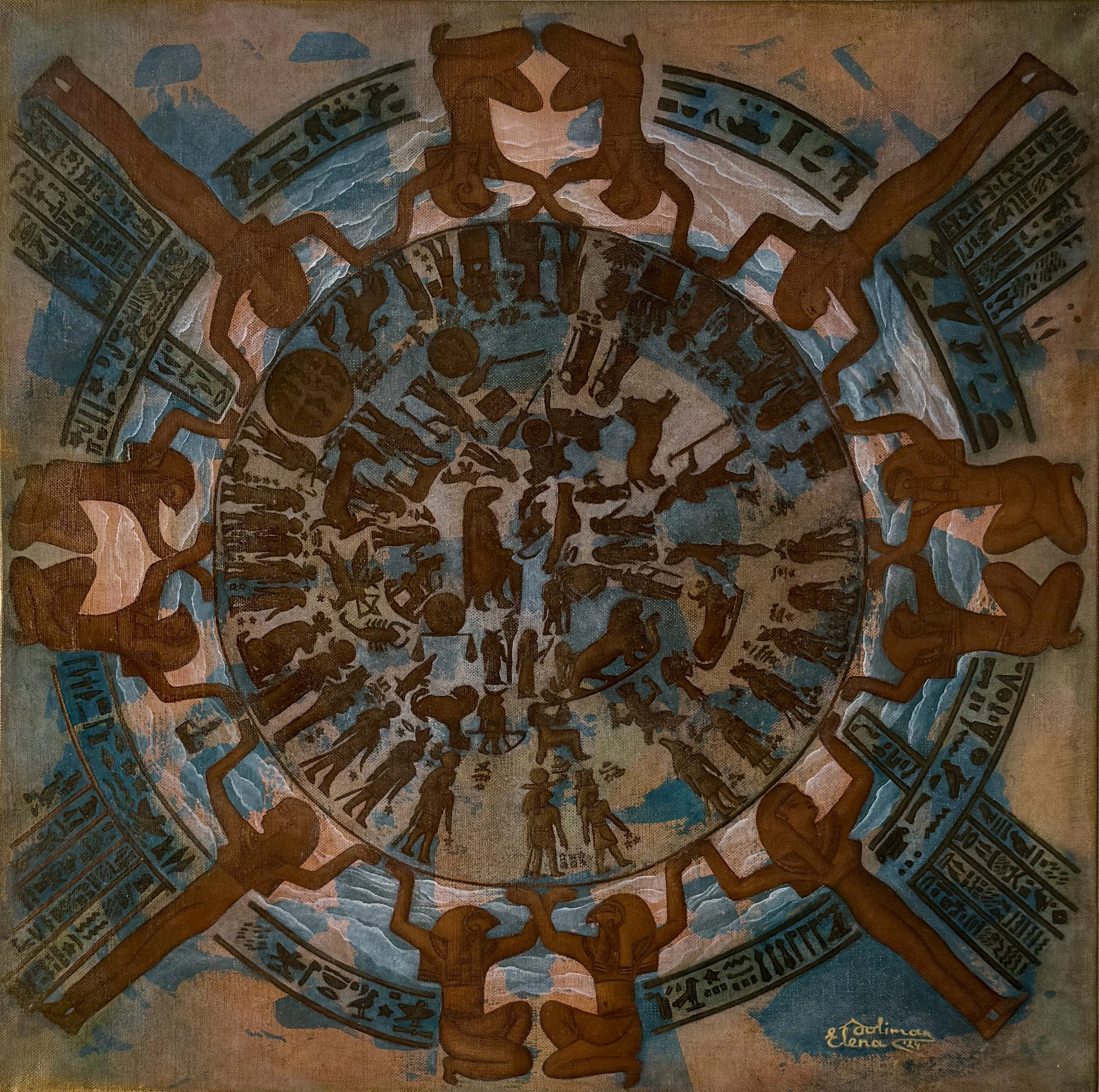
Unveiling the Dendera Zodiac, 2024
THE CHAPTERS
The series is structured across five chapters, each investigating a different dimension of displacement.
-
What does it mean to take an image?
Some of the most recognisable faces in human history are not where they were made. They live in European museums, studied and admired by millions — while the civilisation that created them looks at reproductions. This chapter investigates the particular violence of taking a face: when an image is removed from its origin, it does not simply travel. It is claimed. The people it belongs to are left with a copy of their own inheritance.Description text goes here
-
What does it mean to take a language?
Ancient Egypt speaks to us through writing — through hieroglyphs carved into stone, painted onto papyrus, incised above temple doorways. Some of the most significant keys to that language, and some of its most sacred texts, were removed and now reside in foreign collections. This chapter asks what happens when the instruments of a civilisation's voice are held by those who did not speak that language — and what it means to return a translation while keeping the original.Description text goes here
-
What does it mean to divide a whole?
Objects were not always taken in one piece. Statues were separated from their bases, their twin figures, their architectural bodies. Ensembles that held meaning only together were scattered across museums in different countries. This chapter investigates fragmentation as a method — the way that removal is made easier, and loss made harder to see, when something is broken before it is taken.Description text goes here
-
What does it mean to take an object from its architecture?
Some artefacts were not objects that stood inside a building. They were the building — carved into ceilings, cut from walls, integral to the ritual space they inhabited. Their removal did not simply relocate them. It destroyed the relationship between the object and the place that gave it meaning. This chapter investigates the wound left in architecture, and the particular kind of loss that has no single object to point to — only an absence in the stone.
-
What remains. What is possible.
This final chapter does not end with loss. It turns toward what survives — the objects still in Egypt, the institutions being built to receive what might return, the ongoing effort of documentation, advocacy, and patience. Memory, in this series, is not passive. It is the work of keeping a claim alive across generations, in the conviction that what was taken can, in time, come home.